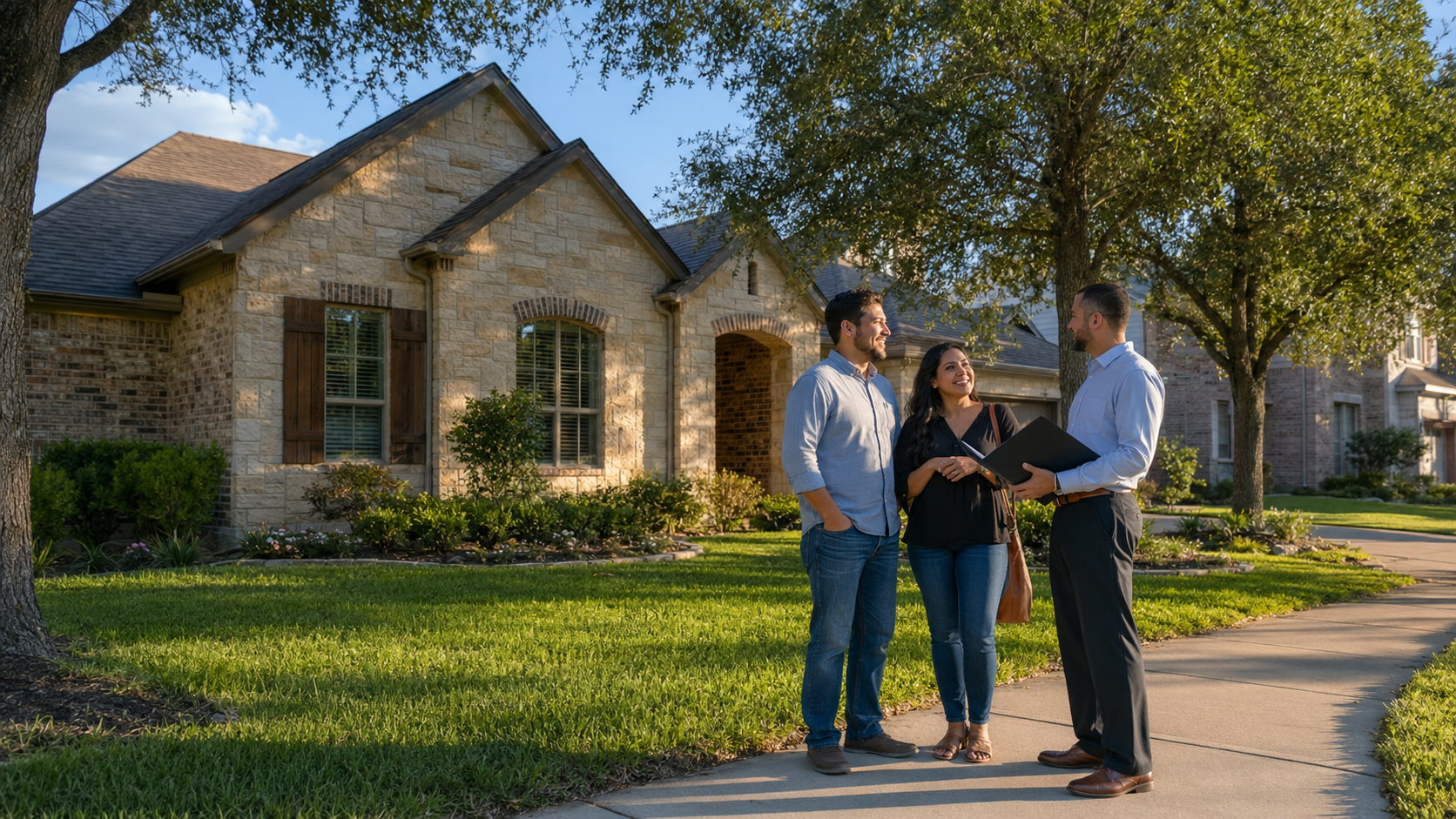
Moving to Richmond, Texas: What It’s Really Like to Live Here in 2026
By Stonecreek Estates Admin · August 1, 2026 · Updated August 12, 2026 · 5 min read

Moving to Richmond, Texas: What It’s Really Like to Live Here in 2026
Let’s pretend we are sitting at a coffee shop and you have just asked me, “So, what is Richmond really like?”
Not the polished answer from a builder’s brochure. Not the version where every family owns matching bicycles and spends Saturday morning laughing beside a perfectly blue neighborhood lake. You want to know what it feels like to live here—where you buy groceries, how far you may drive, whether the schools are good, what the houses cost and whether there is anything to do once the moving boxes are finally gone.
The short answer is that Richmond gives you room to build a life. It has history without feeling stuck in the past, newer communities without turning the entire area into one enormous row of beige rooftops, and enough family activity nearby that “we’re bored” is usually a failure of imagination. It also has traffic, summer heat, property taxes and construction cones that appear to reproduce after dark.
In other words, Richmond is a real place—not a sales pitch. And that is exactly why many people love it.
First, which Richmond are we talking about?
This is the first thing newcomers need to understand, because Richmond is a bit like a family reunion: the group using the name is much larger than the group living in the original house.
There is the incorporated City of Richmond, centered around its historic downtown, courthouse area and neighborhoods near the Brazos River. Then there is the much larger territory that carries a Richmond mailing address. That broader area stretches across fast-growing parts of Fort Bend County and includes master-planned communities, new schools, shopping centers, country roads and subdivisions where the landscaping still looks young enough to need parental supervision.
Two houses can both appear online as “Richmond, TX” while offering entirely different daily lives. One may be close to historic downtown and shaded by mature trees. Another may sit in a new community near the Grand Parkway with a resort-style pool, miles of trails and a tax bill containing more line items than your streaming subscriptions.
Neither is automatically better. The important lesson is that a Richmond mailing address does not tell the whole story. You have to look at the actual neighborhood, school zone, commute, taxes and surrounding development.
What does living in Richmond feel like?
Richmond sits southwest of Houston in Fort Bend County, close enough to benefit from a major metropolitan area but far enough away that life usually feels less frantic. You are not living in the country, although a few roads may briefly convince you otherwise. You are not living in central Houston either, which becomes very clear when you decide to attend something downtown at 5:30 on a Thursday.
The atmosphere changes as you move around. Historic Richmond has old buildings, local restaurants, civic offices and a visible connection to the area’s past. Established neighborhoods bring larger trees, homes with individual personality and yards that have had time to become actual yards. Newer communities offer lakes, playgrounds, trails, pools, splash pads and calendars full of resident events.
There is something comforting about the rhythm here. On a typical Saturday morning, one family is heading to a youth baseball game at George Park, another is wandering through the farmers market, and someone else is standing in a home-improvement aisle wondering how a “quick weekend project” became a three-cart situation.
Richmond is growing quickly, and growth is both exciting and mildly inconvenient. New restaurants and stores arrive. Roads expand. Schools open. Empty fields become neighborhoods with names that sound like they were selected by combining a tree, a body of water and a pleasant emotion. Growth also brings traffic, construction noise and changing school boundaries. You take the good with the orange barrels.
Finding the Richmond neighborhood that fits your life
People often begin a home search by asking for the “best neighborhood.” That question sounds sensible, but it is a little like asking for the best shoes. Best for what? Running a marathon? Attending a wedding? Chasing a child through H-E-B because he suddenly remembered the bakery gives away samples?
The right neighborhood depends on how you live.
If you want character, mature landscaping and proximity to local history, central Richmond and established communities may deserve a closer look. If you want newer floor plans, neighborhood amenities and organized events, one of the newer master-planned communities may feel more natural. Some buyers want a large backyard. Others would happily trade yardwork for a community pool they do not personally have to clean.
Before falling in love with a kitchen island large enough to qualify as its own county, test the practical parts of the location. Drive from the home to work during rush hour. Visit after dark. Find the nearest grocery store, urgent-care clinic and coffee shop. Listen for road noise. Look at the land behind the property and ask whether it is protected green space or simply Phase Seven wearing a field costume.
If the neighborhood has an HOA, read the rules and budget. Amenities can be wonderful, but they come with dues and expectations. If the home sits within a municipal utility district or another special taxing area, understand how that affects the total tax rate. The entrance monument may say “Welcome Home,” but your monthly budget gets a vote too.
What kind of home can you find here?
One reason people consider Richmond is the range of housing. You can find older homes with mature trees, traditional suburban houses, townhomes, large properties, newer construction and expansive homes inside master-planned communities. There is no single “Richmond house,” and any citywide average mixes together homes that may have very little in common.
As of June 30, 2026, Zillow reported a median Richmond list price of $416,500, with 999 homes listed for sale and a median 41 days to pending. The most recent median sale price available at that time was $354,067 for May 2026. Those figures offer a useful snapshot, but they are not a magic price tag hanging over every front door. Age, school zone, lot, condition, tax rate and neighborhood amenities can move the number considerably.
Our Richmond, Texas housing market guide takes a closer look at what those numbers mean. The important thing is to compare homes by their complete monthly cost—not only the price displayed online.
That calculation should include the mortgage payment, property taxes, homeowners insurance, possible flood insurance, HOA dues and utility-district taxes. A shiny new house with an enticing base price can cost more each month than an older resale home with a slightly higher purchase price. Then again, a builder may offer closing-cost help or interest-rate incentives that genuinely change the math. There is no universal winner — browse current real estate resources for Stonecreek Estates, including active new-construction builders, to compare both paths for yourself.
Model homes are designed to make you fall in love. That is their job, and frankly, they are very good at it. They smell wonderful, the towels have never been used and nobody has left a cereal bowl in the sink. Just remember to ask what is included in the base price. Sometimes the home you toured and the home being advertised are distant cousins.
Let’s talk about schools without starting a neighborhood rumor
For families, schools often shape the entire home search. Many Richmond addresses are served by Lamar Consolidated Independent School District, while others fall within Fort Bend Independent School District. But knowing the district is not enough. Attendance zones can change by street, and growing districts periodically redraw boundaries as new campuses open.
Lamar CISD’s demographic materials reported 44,385 students during the 2023–24 school year and projected approximately 55,123 students by 2028–29. That is substantial growth. It explains the new schools, construction plans and occasional rezoning conversations that become neighborhood group-chat material before breakfast.
Always verify the assigned schools for the exact property through the district’s official tools, then confirm directly with the district before making a decision. Stonecreek Estates’ own Schools page tracks updates for the campuses serving our neighborhood specifically. Do not rely entirely on a real-estate website, an old listing or a well-meaning neighbor who begins the explanation with, “I’m pretty sure.”
Look beyond a single online rating too. Visit the campus website. Research the programs that matter to your child—athletics, fine arts, dual language, advanced academics, career and technical education or special education. A rating is one data point. It cannot tell you whether a particular school feels like the right community for your family.
The commute: measure it on a Tuesday, not a Sunday
Richmond is a car-centered area. Depending on where you live and where you are going, you may use I-69/US 59, the Grand Parkway, Westpark Tollway, FM 762, FM 359 or US 90A. On a quiet Sunday afternoon, everything can look delightfully close. Tuesday morning has notes.
If someone in the household works in Sugar Land, the Texas Medical Center, the Energy Corridor or downtown Houston, drive the route during the hours that matter. Do not base a major life decision on a mapping app’s cheerful estimate from 2:14 p.m. Toll roads may save time, but repeated tolls also become part of the household budget.
The good news is that Richmond residents do not have to drive into Houston for every meal, appointment or shopping trip. Richmond, Rosenberg and Sugar Land collectively provide grocery stores, hospitals, restaurants, shops, entertainment and everyday services. You may travel into Houston for a concert or major event, but you probably will not need to cross half the metropolitan area because someone forgot toothpaste.
Property taxes and insurance: the unglamorous part that matters
Nobody tours a house and says, “Forget the primary bedroom—show me the taxing jurisdictions.” Perhaps we should.
Texas does not have a state individual income tax, but property taxes are a significant housing expense. Rates can vary between nearby Richmond homes because they may fall under different cities, school districts, counties, utility districts and other taxing authorities. Review the actual tax statement for the property and note whether the current owner receives exemptions that may not apply to you.
Be particularly careful with new construction. A prior-year tax bill may reflect only the empty lot, not the completed house. That tiny figure can look adorable right up until the property is assessed at its improved value.
Insurance should also be quoted for the exact address before you commit. Cost varies based on the house, roof, claims history, coverage and insurer. Flood risk deserves its own research. Check current FEMA flood information, disclosures, elevation data when available and insurance options. Ask about drainage and previous water intrusion. “The neighbors say it was fine” is comforting conversation, not due diligence.
Yes, it is hot—and other weather truths
Richmond summers are hot, humid and deeply committed to the bit. By August, walking from the front door to the mailbox can feel like entering a steam room while carrying junk mail.
Air conditioning is essential infrastructure here. During a home inspection, pay attention to the HVAC system’s age and performance, attic insulation, windows and drainage. Shade and home orientation also affect comfort and electric bills more than many newcomers expect.
The region can experience heavy rain, tropical storms, hurricanes, strong thunderstorms and occasional freezes. Sensible preparation includes keeping supplies, maintaining trees, understanding insurance coverage and having a plan for power outages. A generator can be valuable when installed and operated safely.
The payoff is that fall, winter and spring often provide lovely outdoor weather. Those are the months when patios, trails and parks truly earn their keep. Summer still has outdoor moments—you just learn to schedule them before the sun begins taking everything personally.
What do people actually do for fun?
Richmond has more personality than outsiders sometimes expect. George Park offers athletic fields, playgrounds, picnic areas, a walking trail and sand volleyball. The Fort Bend Museum brings local history to life through exhibits and tours. George Memorial Library hosts programs for children, teenagers and adults, proving that a library can be a community gathering place and not merely the building where you whisper while looking for the restroom.
The surrounding Fort Bend area adds even more. Brazos Bend State Park offers hiking, nature programs, wildlife viewing and the George Observatory. Yes, you may see an alligator. No, this is not the moment to pursue the perfect family selfie. Sugar Land adds museums, restaurants, shopping and entertainment venues, while Rosenberg contributes its own historic downtown, local events and dining. For local, resident-recommended options closer to home, browse the Stonecreek Estates business directory.
Families can fill a weekend without driving into central Houston, whether the plan calls for baseball, history, nature, food or an air-conditioned activity because the thermometer has become disrespectful. Our guide to after-school activities for Richmond families has ideas organized for the days when everyone wants an outing but nobody can agree on one.
So, should you move to Richmond?
Richmond may fit you well if you want a broad range of homes, family-oriented neighborhoods, suburban conveniences and access to the larger Houston area. You can choose between historic character, established streets and growing master-planned communities. You can find Saturday activities nearby and still return home to a pace that generally feels calmer than the city center. Curious specifically about life inside Stonecreek Estates? Our About page covers what makes this neighborhood distinct within the broader Richmond area.
It may not be right if you want a highly walkable urban lifestyle, cannot tolerate HOA rules, dislike driving or need a consistently short commute into central Houston. Rapid growth can also frustrate people who want everything around them to remain exactly as it was when they arrived. For quick answers to more of the tradeoffs new residents ask about, see our neighborhood FAQ.
The best way to decide is to spend time here as if you already live here. Do not only tour houses. Make the commute. Visit a grocery store at 5:30. Walk through a park. Eat at a local restaurant. Drive the neighborhood after a heavy rain and again after dark. Notice whether the rhythm feels natural to you.
A relocation is not really about finding the prettiest kitchen or the largest game room. It is about choosing the Tuesday mornings, Saturday afternoons and ordinary family dinners that will happen around that house. Richmond will not be perfect—no community is—but for many people, it offers enough space, warmth, convenience and community to feel genuinely like home.
Sources